Sunday, May 14, 2006

Going Local: Dairy Dilemma

Note: This post is part of an ongoing report on my efforts to eat locally for the month of May. You can read about my goals, exceptions and guidelines here.

As a Wisconsin girl, I’m a fan of any and all dairy products. Of course, if I still lived in Wisconsin, getting good local dairy would be easy, while in Los Angeles, it’s proved a bit of challenge. Sure, “local” dairies like Altadena aren’t hard to find—but in a huge city like LA, local doesn’t automatically mean sustainable (Altadena’s basically a factory farm these days).

So, to answer the question left in the comments by Petra last week—where can you get local dairy products in LA? Well, an exploration of Whole Foods turned up local milk from Broguiere’s dairy, based in Montebello, CA since 1920. For yogurt, I’ve had to expand my foodshed to Northern California—I’ve been eating and baking with plain yogurt from Straus Family Creamery of Marin County—a small family dairy committed to sustainable agriculture.

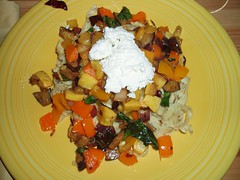
The best discovery so far, though, has been Cardone’s Mozzarella. Richard Cardone makes fresh ricotta, mozzarella and boccocini right here in my neighborhood and sells it at both the Silver Lake and Atwater Village Farmers' markets every weekend. It’s fabulous stuff, especially the ricotta. In fact, we like it so much it found its way into many a dish this past week—sprinkled on our ratattoulle, mixed in our potato-asparagus hash, and stuffed inside our mint and pea ravioli. The boccocini, on the other hand, don’t mix with anything other than a plate of olive oil, salt and pepper and then head into our mouths.

Cardone's ricotta on ratattoulle.

I’m still looking for more local dairy options—I’m about to run out of the butter I had in the fridge before the Eat Local Challenge began. If anyone has any recommendations, please let me know in the commetns.

Friday, May 12, 2006

Going Local: The Blue Hen

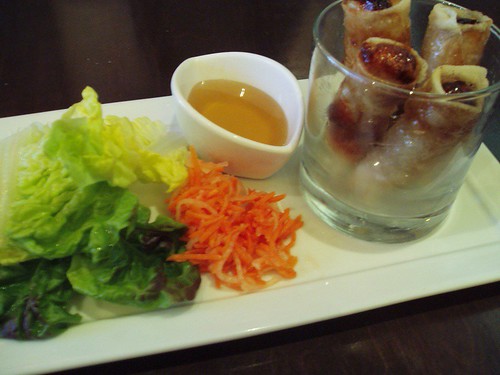
Where are the herbs? For the uninitiated (which was me until recently), you wrap your imperial rolls in a big ol' leaf of lettuce, usually incorporating carrots, cucumbers and some fresh basil, mint or cilantro.

Sometimes I think of Eagle Rock as a midwestern college town plunked down in the middle of Los Angeles. Of course there are millions of differences, but the sensibilty, particularly of the eating establishments, is the same. Small, unpretentious and reasonably priced, yet more creativity and quality than you'd expect. Anyway, it's a place we go when we're looking for quiet in this insane city.

The Blue Hen is a relatively newish addition to the eclectic mix of Eagle Rock restaurants. It's a small Vietnamese-inspired joint with a commitment to organic and local foods. Their chickens (the only meat on the menu) come from Kendor Farms, an organic, free-range place smack in the middle of the San Fernando Valley, and the produce comes from the local markets.

Despite the worthy values of the place, it could use a few tweaks. For example, considering the abundance of cheap basil and mint and cilantro at LA farmers' markets, it was strange that the Blue Hen's imperial rolls and pho came with the tiniest piles of veggies and herbs I've ever seen in a Vietnamese place. In fact, the imperial rolls came with nary an herb in sight. Also, $2.50 for a lime tonic? It was a yummy, refreshing drink--but considering it's basically lime juice and soda, a little steep.

Relatively speaking, these are minor complaints. I had a yellow curry that incorporated a nice balance of smokiness and cinammon, with a side of perfectly cooked, garlicky greens. J went for the chicken pho, and even without tons of herbs, the broth was rich and flavorful. The prices of entrees are reasonable ($7-9ish), the waitstaff friendly, and the atmosphere's pleasantly college town-esque. Plus, it's nice to see a small, low-priced place committed to local food.

The Blue Hen
1743 Colorado Blvd
Los Angeles, CA 90041
(323) 982-9900

Erin's Kitchen Restaurant Index: Los Angeles: East-ish

Tuesday, May 09, 2006

Zee Carrot Zoup


One of our first meals out in LA was at Michelangelo's, a low-key pasta/pizza joint in Silverlake, run by a family of Italian-by-way-of-Venezuela brothers. On that night over three years ago, and on many nights since, our waiter has extolled the virtues of "zee carrot zoup...eet ees very good tonight."

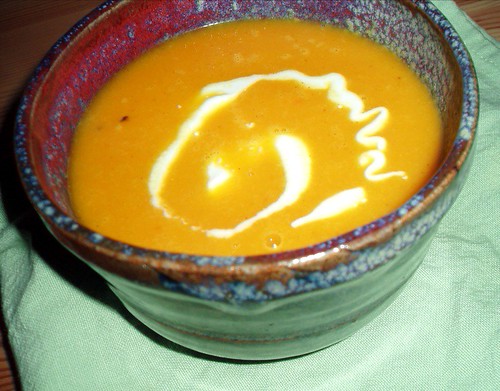
Despite the accolades, I've never tasted their zoup, yet when looking in my fridge last Thursday, stumped as to what to make for dinner with the last of my local produce, the waiter's voice popped into my head and some gingery, curried carrot zoup was born. Interestingly, the antioxident levels increase in carrots when you cook them, so this soup also works for Sweetnicks ARF/5-a-Day Tuesdays.

The yogurt swirl is from Straus Family Creamery. Still stumped on truly local yogurt.

Zee Carrot Zoup

Start by roughly chopping a small onion, one stalk of celery, 1 1/2 lbs. carrots, and an inch square piece of fresh ginger. Toss the onion, celery and ginger in a soup pot with 1/4 c. water and a bit of butter, and cook until veggies are softened. Sprinkle with a hefty dose of curry powder, salt and pepper, then add the carrots and 4 c. of water (you could use veggie or chicken stock instead, but I was determined to stay local). Bring to a boil, then turn down to a simmer and cook 15-20 minutes until carrots are soft. Carefully and slowly whirl the soup in your blender until smooth and amazingly orange. Serve with a swirl of plain yogurt--this really helps cut the spiciness.

One sad note: I made a ton of soup and had some leftovers for lunch the next day. I found that the ginger flavor had multiplied exponentially and practically burned my throat. Not good. Maybe it needed to be cooked down a bit more?

Erin's Kitchen Index: Soups, salads and veggies

Saturday, May 06, 2006

Favorite Things Saturday: The Cook's Library


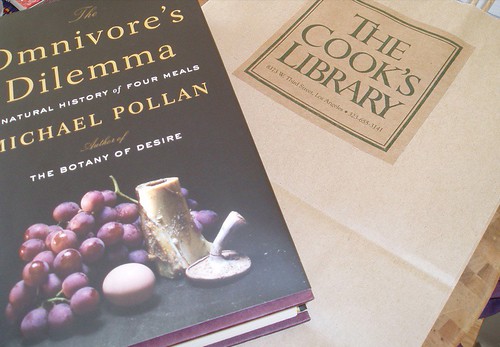
The Cook's Library, combines my two favorite things, food and books, perfect for Jill's Favorite Things Saturday. The smallish, cozy yet well-stocked shop resides at 8373 W. 3rd St in Los Angeles, between La Cienega and Fairfax, and its complimentary bookmarks read: "A bookstore dedicated to the professional as well as amateur food lover and cook." The salespeople are knowledgable and friendly, willing to order any book not currently stacked on their shelves. On Friday night, I arrived just minutes before closing and the clerk graciously welcomed me, as though I had all the time in the world. I was looking for The Omnivore's Dilemma by Michael Pollan and though I'm sure I could have found it on Amazon, it wouldn't have been as much fun.

As a side note, if you're interested in seeing Michael Pollan discuss this book--which hones in on a seemingly simple but of course endlessly complicated question: "What should we eat?"--you can join me at the downtown Los Angeles Public Library on May 10, 2006, 7 p.m. You can read more and make reservations here.

Thursday, May 04, 2006

Going Local: Vermont/Adams Farmers' Market

Note: This post is part of an ongoing report on my efforts to eat locally for the month of May. You can read about my goals, exceptions and guidelines here.

Squash blossoms, debugged.

Wednesday is the farmers' market day in Los Angeles--well, Santa Monica to be exact. It's the day for the biggest and most diverse market in the greater LA region, the one that local chefs go to, the one highlighted each week on KCRW's Good Food. Yet, unless you're the aforementioned chef or collecting unemployment, it's daytime hours make it virtually impossible for us working stiffs to visit.

So, needing to refresh my local produce on Wednesday, I did not take an extra long lunch and head to the beach but instead left work just a tad early and stopped at the much smaller market in the St. Agnes Catholic Church parking lot just before the intersection of Vermont and Adams, a much poorer section of town than tony Santa Monica.

The Vermont/Adams market was all about green and orange. Most stands were awash in either various lettuces, collards, bok choy, cilantro, parsley and other big bunches of leafy greens or piles of oranges. There was a honey guy and an egg gal, and one prepared food stand selling icees and popcorn. Most sellers and customers were Hispanic, and my pathetic Spanish got me the location of most of the farms (predominately Riverside, east of LA, within my 100 mile radius) but not much more than that. One guy had some bunches of what I call snakegrass, he called horsetails. I asked about it and he said people make tea out of it to help with their kidneys.

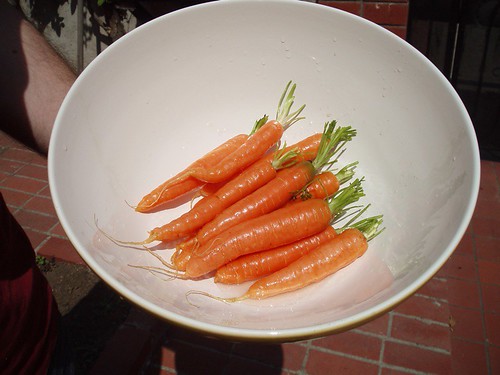
I picked up squash blossoms, basil, carrots and some large, finger shaped radishes. Squash blossoms were new to me--they smell delightfully squashy and worked well in an egg scramble with fresh basil and chives. I cooked 'em up whole, but first removed the stems and stamen. Mine were also alive with teeny, tiny bugs, so be sure to wash them carefully as well.

Vermont/Adams Farmers' Market
Wednesdays, Sept-May 2 pm-5 pm, June-Aug 1 pm-6 pm
1432 W. Adams, St. Agnes Catholic Church
Just west of Vermont/Adams, on the south side of the street

Wednesday, May 03, 2006

Going Local: Risi i Bisi, a few days late

Note: This post is part of an ongoing report on my efforts to eat locally for the month of May. You can read about my goals, exceptions and guidelines here.


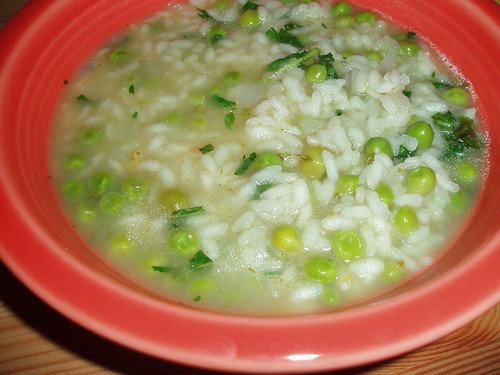
In late April, Venetians celebrate Saint Mark's Day by highlighting the first of the spring peas in a risotto-esque soup, Risi i Bisi. I know this not because I keep track of major Catholic holidays but because about this time last spring, Nigella Lawson told me so in her column in the New York Times. Since then, I've made the soup numerous times, both with fresh and frozen peas. What I'd never done, however, was use the fresh pea pods to make the stock for the soup, a recommendation from Nigella in the version of this recipe in her cookbook, Forever Summer.

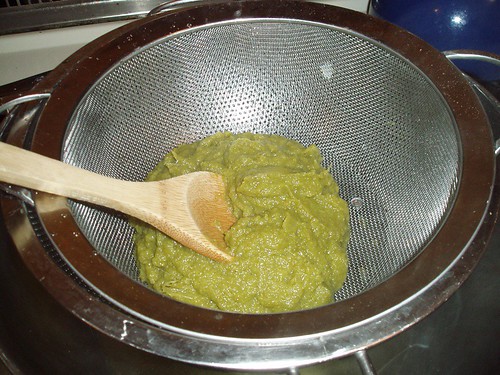
Straining the pea pods after they'd cooked down and been thru the food processor.

This additional step meant the recipe was perfect for eating local--no worries about the provenence of canned stock, and all the veggies are in season at the farmer's market (I had the arborio rice in my cupboard already). Plus, you actually use all parts of the vegetable, and I do hate to see those beautiful pods unceremoniously dumped in the trash.

So, here's to San Marco--and a city that celebrates its saints with local food!

Risi i Bisi
slightly adapted from Nigella Lawson's Forever Summer

2 lbs shelled fresh peas, pods reserved
7 c. water
1 stalk celery
1 bay leaf
butter
1 small onion, diced (I actually subbed 1 shallot and two pearl onions)
1 c. arborio rice
handful of mint, chopped
salt and pepper

In a large stockpot, bring water, pea pods, celery and bay leaf to a boil, then turn down to a simmer. Season with salt and pepper and cook for approximately 1 hour, until pods are soft. Strain liquid into metal bowl, and run the pods thru a food mill. If you don't have a food mill, do what I did: put them in your food processor and then strain through a metal strainer into bowl of stock. Even though it's a pain, you'll want to strain so you don't end up with stringy bits in your soup.

In a large sauce pan, saute onions in butter until translucent and starting to brown. Toss in your shelled peas and stir, then add rice and stir until everything's slicked with butter. Pour all of your stock in at once, bring to a boil, then turn down and cover. Cook for 15 minutes, taste for seasoning. Mix in handful of chopped fresh mint, and serve.

Erin's Kitchen Index: Soups and salads; Easy Weeknight Meals

Monday, May 01, 2006

Going Local, Day 1: Well Prepped

Note: This post is part of an ongoing report on my efforts to eat locally for the month of May. You can read about my goals, exceptions and guidelines here.

Pasta dough ingredients, pre-mixing. The eggs and herbs are local.

When I was a kid, my parents always made me get everything ready for school the night before--pack my lunch, organize my backpack, lay out my clothes. I still (mostly) adhere to this method, and have decided to use it as my guiding principle for eating locally as well--getting ready on the weekends for a week of meals. One of my biggest concerns joining the Eat Local Challenge was time--I work relatively long and sometimes unpredictable hours, and I didn't want to fall off the wagon some night at 10 p.m., scarfing tacos from the stand down the street.

So--be prepared. First, I needed the local ingredients of course, so a trip to the Hollywood Farmers' Market was in order. I discovered a new-to-me stand, Mitchell Herbs and Specialty Produce, out of Redlands, CA, about 70 miles east of Los Angeles. Doug Powell farms 2 1/2 acres originally purchased by his in-laws and specializes in onions, garlic, lettuce, carrots, beets, fava beans and blackberries. He sells only at farmers' markets and to Farm Artisan Restaurant in Redlands. (You can read more about his farm here, though registration is required.) I picked up shallots, pearl onions, spring onions and yellow onions at his stand.

After the shopping ended, I spent the rest of the weekend baking bread, kneading pasta dough and sauteeing tomatos and onions. Some of each ended up in the freezer, some in the fridge, and tonight, some in my belly. J and I ate a late dinner of marjoram-flecked tagliatelle tossed with a simple tomato sauce. All we had to do when we came home was roll out the pasta dough, a fun and easy task, cook the noodles, and warm the sauce.

My basic tomato sauce recipe is easy to make in bulk, can be dressed up in myriad ways, works well with pasta, and makes a great pizza sauce if you run it through your food processor. Usually at the farmers' market you can find bins of cheapo tomatos marked "good for sauces and salsa" which means they're a bit soft and kinda ugly, but taste just fine.

Basic Tomato Sauce

fresh tomatos, seeded and chopped
1 yellow onion for every 2 lbs. tomatos, finely diced
3 cloves garlic for every 2 lbs. tomatos, finely diced or pressed
bouquet garni of fresh marjoram, basil and thyme
olive oil
salt and pepper

Saute your onions in some olive oil over medium heat, until they are uniformly soft and starting to brown. Add garlic, let sizzle a minute or two. Then add your tomatos and your bouquet garni. Season with salt and pepper. Bring to a boil, then turn down to a simmer. Depending on how thick you like your sauce, how finely you chopped your tomatos, and/or how big a batch you're making, simmer over low heat for at least 1/2 hour and up to 2 hours.

Erin's Kitchen Index: Pasta, Rice and Eggs

Sunday, April 30, 2006

Not Quite Deep End Dining**

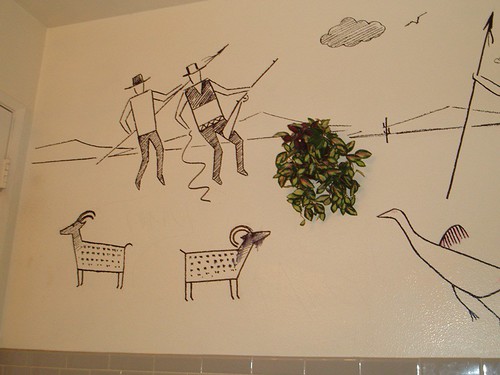
The bathroom at Indian. My food photos were all too blurry.

Friday night, intrigued by this article in the LA Times, J and I headed to Indian, a Taiwanese pub in San Gabriel. The beer's cheap, the floor's grimy, and the food's flavorful, a bit greasy, and, as the article asserts, much better than anything you'd find at your typical American pub.

To soak up our $10 pitcher of Kirin, we ordered fried duck tongue (teenage Taiwanese waitress, surprised: you like duck tongue? me: well, I've never had it. Do you like it? waitress: No, but you should try it), sauteed eggplant with basil, three-flavored chicken, and grilled corn. First came the tongue, and hot damn, they looked like a big ol' pile of tongues. J took the plunge first--and found there was nothing to worry about. The light batter was peppery and crunchy, nicely balancing the fattiness of the tongues, which weren't chewy at all (as I had feared). Really the perfect pub snack, quite right with a cold beer. We ate about 1/2 the order--as they got colder they lost their allure, and really, how many duck tongues does one need? I will admit, later that night while dozing off in bed I did have a vision of a gaggle of tongueless ducks chasing after me.

Our other favorite dish was the grilled corn, smoky and spicy. I asked the waitress about the flavors and she said it was a "mix of too many spices to name" and also mentioned that they deep fry it first for 30 seconds then grill it so it stays moist.

We arrived early in the night (around 7:15 p.m.) and had no problem getting a spot, but by the time we left a crowd was waiting outside the door. Despite the line, no one seemed to mind that we lingered watching the Lakers as we finished our pitcher, and many nearby tables seemed settled in for a long night of drinking, at least until Indian's 2 a.m. close.

Indian
633 San Gabriel Blvd (corner spot in a strip mall)
San Gabriel, CA
(626) 287-0688

**For some real eating adventures, visit Eddie Lin at Deep End Dining.

Erin's Kitchen Index: Los Angeles Restaurants: East-ish

Saturday, April 29, 2006

Going Local

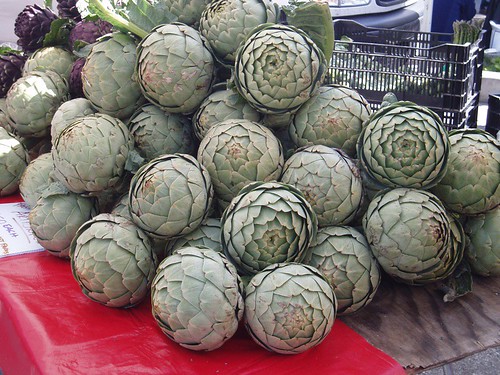
locally grown artichokes at the Santa Monica Farmer's Market

For the month of May I’ll be living like there’s no jumbo jet, cargo ship or semi-truck available to deliver grapes from Chile or steak from Nebraska. Joining the Eat Local Challenge is a chance to focus on reducing my “ecological footprint” and supporting small, local farms.

To me, eating locally conjures up images of my Grandpa Johnny—a lifelong resident of the Upper Peninsula of Michigan, who fished Lake Superior nearly every day of his life, and smoked his own trout in his backyard. It reminds me of the Wisconsin farm of one of my best friends, where the entire extended family comes together once a year to butcher their cows. I think of my Grandma Sally’s homemade strawberry jam, and her knowledge of nearly every good wild berry patch within a 25 mile radius of her house. I remember last summer, sitting on my parents porch with my dad, scraping kernals off ear after ear of sweet corn, to be frozen for a treat come December.

So, with an eye to my midwestern heritage, I’ll do my best this month. One thing I'm having trouble sourcing--locally-made yogurt, a breakfast staple in our household. Any Angelenos have suggestions?

Here are my answers to questions for participants:

1. What's your definition of local for this challenge?
For fruits, vegetables, eggs, dairy, and wine, within 100 miles of Los Angeles, CA. For meat and fish, within California.
2. What exemptions will you claim?
Coffee is non-negotiable, but we do get our beans from a local, environmentally-minded roaster, Groundwork. Anything already in my pantry (spices, flour, sugar, rice, etc) is fair game, and if I need more basic baking goods to make bread, I can buy it. Also, my trip to MA at the end of the month doesn’t count.
3. What is your personal goal for the month?
Other than the aforementioned out-of-town sojourn, I aspire to make 75% of my meals homemade and local this month. My other primary goal for the month is to focus on making as many “basic” foods as possible myself—bread, pasta, granola, etc. I want to set aside time on the weekends to bake and cook, freezing and storing as I go.

Friday, April 28, 2006

Lemony Angel Roll

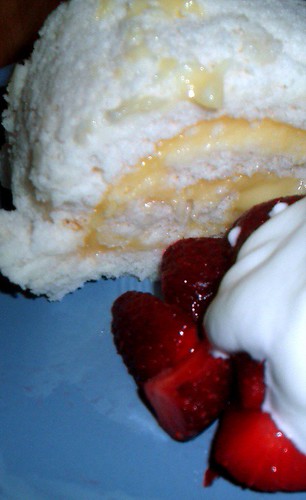
J loves anything lemon almost as much as he loves angel food cake, so I decided to treat him (and me!) to this dessert last weekend. Other than indulgence, it was a way to use up some about- to-expire eggs and an I-don't-know-how-we-ended-up-
with-so-many pile of lemons.

The Joy of Cooking has become my go-to basic baking book--it is very particular, but its recommendations have not failed me yet. For example, for the angel food sheet cake, it instructed me to first sift my flour, then sift the sugar, flour and salt together not once, not twice, but three times. I was able to overcome my lazy gene and followed the rules, and was rewarded with an extremely light cake. Conversely, when I ignored the instructions--I had no parchment paper so I just greased the pan instead of lining it--I paid the price with a cake that was difficult to remove and cracked in places.

The filling is a simple lemon curd, and I served it with strawberries and cream, and our slices were gone in about 5.3 seconds.

Erin's Kitchen Index: Cookies, Cakes, Breads and other treats

Tuesday, April 25, 2006

Fresh Fava Bean Frustration

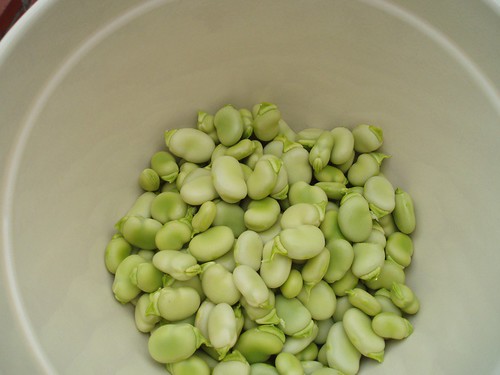
Fresh favas after shucking, blanching, and shucking again.

I really, really like eating fresh fava beans. But I'm not convinced it's worth the ridiculous effort involved in making them. You start with a huge bag full o'bean pods, and after not one but TWO shuckings, you end (hours later) with a puny pile of admittedly gorgeous green insides.


Favas after first shucking, pre-blanching. Once they're blanched, I either use a knife or my fingernail to push into the bean by the stem on the top and pop the hard skin off.

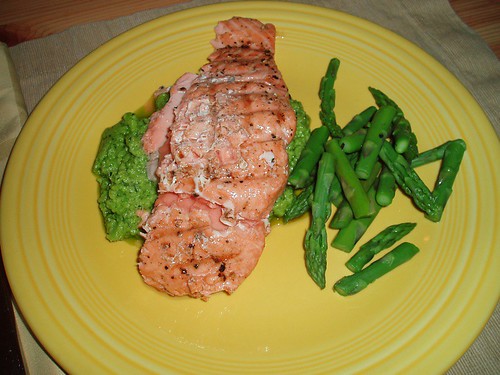
Don't get me wrong--I don't mind working for my food, and on the weekends I often tackle long and involved recipes. Yet there's something about favas--I'm always slightly disappointed with the meagerness of the end product. So--once a spring is about it for me. And 2006's "once" was this past Saturday, when we grilled some king salmon and served it over pureed fava beans.


The recipes and pairing came from Mario Batali's Babbo Cookbook, but the fava puree is so easy, you don't need really need a recipe. First off, buy a bagful of the biggest fava beans you can find at the market. Then pop the beans out of their pods--the way I do it is to make a small cut at one end and then pull the string off the side, which usually opens the pod. Blanch your beans in boiling water for 4-5 minutes, then drain. Again, pop the beans out of the tough outer shell-- sometimes I use a knife, sometimes my brute (harhar) strength. Whirl in the food processor with a tablespoon or two of fresh thyme. Add slugs of olive oil until it reaches a slightly smooth texture, and season with salt and pepper. Warm in a saute pan over the stove before serving with the salmon.

Erin's Kitchen Index: Soups, Salads and Veggies

Sunday, April 23, 2006

Do we really have to work tomorrow?


Strangely, today the sky was sunny in Santa Monica and sullen in Los Feliz. We brought some of the sunshine home from the beach-side farmer's market though, in the form of blood oranges, which J transformed into cocktails. Cheers!

Blood Orange Cosmopolitans for two

juice of 5 medium blood oranges
juice of one lime
2 1/2 shots vodka
splash of triple sec

Mix ingredients in cocktail shaker filled with ice. Shake, shake, shake and strain into two glasses. Don't drink too fast.

Thanks to the Babbo Cookbook for inspiration.

Saturday, April 22, 2006

Easy Weeknight Meals: Spring Green Tart

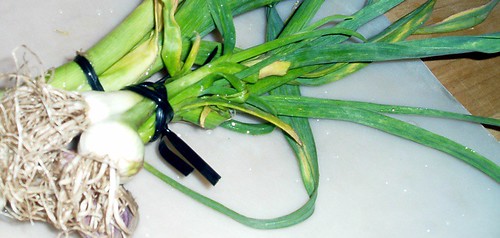
Green garlic smells like fresh dirt. It's a good smell.

My favorite farmer's market in SoCal is the one on Thursday night in South Pasadena. It has a small town feel, full of families and neighbors enjoying the almost-weekend, munching sweet corn, tamales, buttery sauteed mushrooms and other treats while sprawled on the green lawn that abuts the market. With its diverse mix of stands, it allows me to get prepared for (and excited about) weekend cooking, unlike the huge Hollywood farmer's market, which takes place on Sunday.

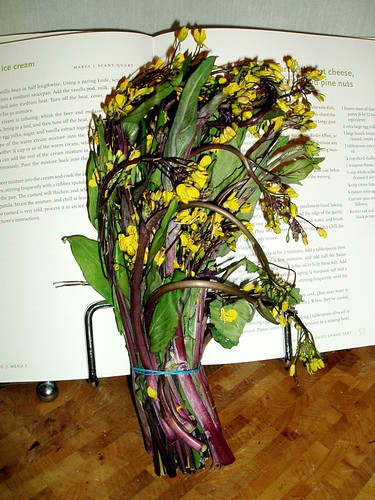
This week, before meeting up with friends for our own tamale dinner, I made the rounds and picked up green garlic, a new to me Asian green, hon tsai tai, and rainbow chard. I was attracted to the hon tsai tai by the deep purple color of the stems and its tiny yellow flowers, and the scrawled description on a nearby index card--mildly mustardy. We left the veggies in our truck as we spent time with friends and we returned to cab smelling strongly of green garlic--or as J put it, "fresh dirt."

Hon tsai tai, pre-chopping.

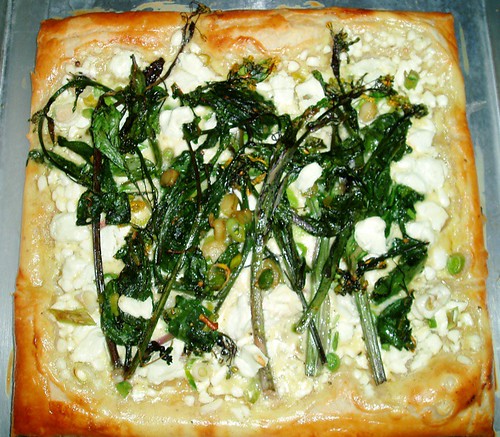
All three of my purchases ended up on a cheesy tart last night, an adapted version of the tart I wrote about here. Other than a modification in the toppings, I also substituted cottage cheese for ricotta and omitted the 1/4 c. of creme fraiche, in an attempt at healthy living. It worked remarkably well--probably because the crust and the goat cheese add enough richness. While pleasantly bitter, the hon tsai tai didn't taste particularly mustardy, and if cooking with it again, I'd remove the tough stem, or cook it down a bit longer.


Spring Green Tart

1 frozen sheet all-butter puff pastry
2 egg yolks
1/2 large bunch of rainbow chard, center ribs removed, roughly chopped
handful of trimmed hon tsai tai
3 bunches sliced green garlic
1 tsp. thyme leaves
1/2 c. low-fat cottage cheese
1 tbsp. cream
6 oz. goat cheese

salt/pepper
olive oil

Preheat oven to 400.

Defrost puff pastry (I wrap the folded piece in a damp towel) and unroll it on a lightly oiled baking sheet. Score a 1/4-inch border around the edge of the pastry. Mix one egg yolk and a splash of water, and brush along the border. Chill the pastry in the freezer until ready to use.

Heat a large saute pan over high heat, and add tbsp. olive oil. Then add thyme and 1/2 the green garlic, and saute for a few minutes. Then add the chard and the han tsai tai, tossing in oil to help them wilt. Season with salt and pepper. Cook, stirring frequently, until greens are tender. Set aside to cool.

Mix cottage cheese, remaining egg yolk, cream, splash of olive oil, salt and pepper together in a bowl (If you'd like it really smooth, you can puree in food processor).

Spread cottage cheese mixture on the puff pastry inside the scored border. Crumble half of the goat cheese over the cottage cheese, arrange the cooked greens on top, and sprinkle with the rest of the green garlic. Then distribute the last of the goat cheese on top.

Bake the tart for 20-25 minutes, until cheese is bubbling and crust is golden brown. Cool a few minutes and serve.

Erin's Kitchen Index: Pasta, Rice, and Eggs Easy Weeknight Meals

Friday, April 21, 2006

Erin's Kitchen Does New York: April 2006

Best Of New York April 06: Sweets and Treats
Best Of New York April 06: Leisurely Lunch
Best Of New York April 06: Monday Night Dinner
Best Of New York Aril 06: Crowd Pleaser

Okay, instead of posting random bits and pieces from my latest trip to New York City, I'm going to arrange posts in a "best of" fashion. Of course, this is just the "best of" my most recent trip--not comprehensive by any means. (I'll leave that to New York Magazine).

Wednesday, April 19, 2006

April 06 NYC Best Of: Leisurely Lunch

'wichcraft in Bryant Park

J's roast pork with coppa, pickled pepper relish, and fontina panini.

70 degree sunny spring day + green grass and budding trees + fabulous people watching + a yummy sandwich = outdoor lunch heaven. Having sampled the Shake Shack on our last NYC trip, this time we headed for Bryant Park instead, much closer to J's midtown office, and home to chef Tom Colicchio's 'wichcraft stands, hawking fancy sandwiches, salads and soups (there are also two seperate stands for coffee and ice cream). The salad/soup stand is seperate from the sandwich one, which means unless you're a dedicated "preview everything before I choose" kind of person, willing to make the rounds, you must limit your options. We went for sandwiches, where the menu is divided into warm and cool--most of the warm seem to be of the panini persuasion.

J had the roast pork, while I stuck with my favorite of all time--grilled cheese. This of course was a chichi-lala grilled cheese with gruyere and carmelized onions. Both were filling, but not too big, and much more flavorful than the turkey sandwich I usually pack for lunch. The stand also served a few sides--mixed greens and a chickpea salad, and had a mix of high-end sodas. Normally, it sells chips as well, but I heard the counter guy tell folks ahead of us that they'd be out of chips for a couple of weeks?! So much for a city where you can get anything, anytime!

Honorable Mention:
Pearl Oyster Bar and Grand Central Station's Oyster Bar

Pearl Oyster Bar
Who knew that you ever actually found a pearl in a restaurant oyster? Exactly that happened to my neighbor during lunch at this aptly named spot in the West Village. The bartender at this sunlit urban lobster shack graciously rinsed it and provided a container for the patron to take her treasure home.

Pearl’s had been at the top of my list for solo dining since reading about it in Amanda Hesser’s Cooking for Mr. Latte a few years back. This tiny place is primarily made up of a long, skinny bar, with a narrow side room packed with small tables. It serves lunch from 12-2 on weekdays, dinner later, and was fairly full when I visited around 1 on a Monday. The short menu features seafood simply prepared. I had the pan-fried cod sandwich served with shoestring fries. The huge piece of fish was ensconced in a crusty-on-the-outside, chewy-on-the-inside roll, and slathered with a homemade tarter sauce, dotted with diced cornichons. At my perch at the end of the bar, as a slowly savored my sandwich, I could watch the action in the kitchen, as chef Rebecca Charles (wo)manned the grill.

For wine, the woman sitting to my right recommended the Gruner Veltliner, and following her lead, I had two glasses. As she explained to me, she wasn’t heading back to work that afternoon, and of course, neither was I.

Oyster Bar at Grand Central Station
As you can see, I like my seafood. This was my last meal before catching the bus to the airport, and an appropriate NY send off. The cavernous, brick-lined space was full of a noisy mix of tourists, families, businessmen, and seemingly tryst-like lunches. The extensive menu covers all the seafood bases, printed up daily, highlighting what's fresh.


The restaurants eponymous platter--8 different oysters.


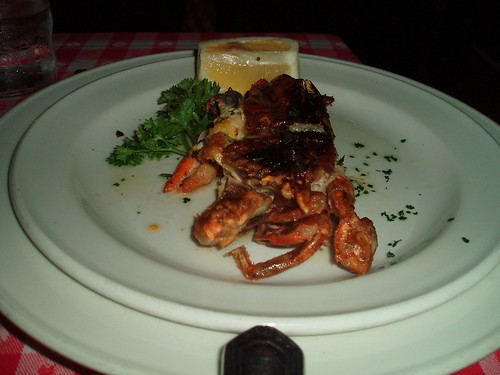
The main purpose of our visit--in season softshell crab.


Old school--four cold seafood salads. Shrimp with ginger sauce, crab ceasar, salmon with vert sauce, and squid with basil.

Sunday, April 16, 2006

April 06 NYC Best Of: Crowd Pleaser

Stepping into The Spotted Pig at 9 p.m. on a Saturday night, you might easily think it was just another crowded bar in the West Village instead of a Michelin-starred gastropub. On my recent visit, both the downstairs and (new) upstairs rooms were packed with 20 and 30 somethings clutching pints, many in groups of 4 or more, spilling well past the confines of the barstools, practically sitting on diners laps. A few minutes in, however, you notice the specials scrawled on a mirror in the back include cockles steamed in beer and fresh herbs, and catch a whiff of the sage and butter gnudi rushing by in the waiter’s hand, and you realize the crowds are there for more than the British beers on tap.

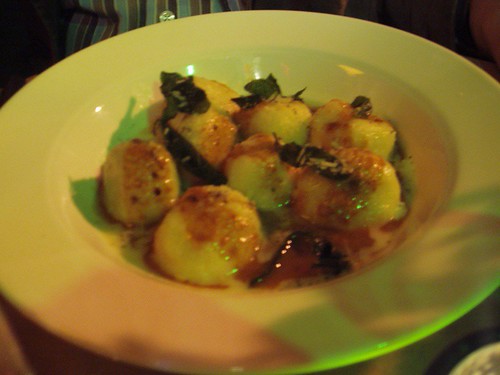
ricotta gnudi with sage and brown butter

The Spotted Pig doesn’t take reservations for parties under 6, nor does it waste space on a hostess stand. Luckily, the man taking names the night of our visit was extremely tall with shaggy hair, wearing a distinctive ski sweater. Upon getting his attention, he produced a crumpled, folded index card from his back pocket and scrawled our name on the end of a very long, messy list. Informed that our wait would be about an hour or a little more, we found a cozy corner, a couple of glasses of Spotted Pig Bitter, and enjoyed the scene, trying not to snatch a fry or two from the piles of shoestrings on the burger plates floating by every few minutes.

Nearing the end of our wait (“next table’s yours” according to ski-sweater man), the actor from Match Point walks in (Jonathan Rhys-Meyers) with a lovely lady in tow. He searches upstairs and down for a table, and then reappears a the bar, seemingly content to drink with the rest of the plebes. However, after a quick conference with other wait staff, tall, shaggy ski boy whisks Mr. Pouty Lips upstairs, looking somewhat apologetically our way. In the end, our table loss to marginal celebrity didn’t matter—another five minutes and we secured a spot downstairs.

Having watched many dishes go by, we knew we’d start with the aforementioned cockles and gnudi (basically, ricotta cheese gnocchi). The tiny cockles popped in my mouth tasting of the sea, tinged with butter and beer, the pile of fresh, raw herbs providing extra flavors and a contrasting texture. The creamy gnudi were as decadent as imagined—yet the slight sourness of the ricotta prevented an overload of richness.

Our main courses were rabbit and cornish hen, both rich and perfectly done. The rabbit in particular was cooked long and slow, so the meat was falling off the bone. Sizable portions each, though with the rabbit it may have been prudent to order a side dish—it was fairly lonesome on the plate (the hen came with polenta). Dessert was fine, but not necessarily worth the calories—we shared a lemon and lime tart and a slice flourless chocolate cake. I prefer flourless chocolate cakes that are dense with pudding-like centers, while this reminded me more of chocolate mousse.

As we finished our meal around 12:15 a.m., the crowd had started to thin, but only slightly. The kitchen stays open until 2 a.m. on weekends, and tables were still filling as we left. Obviously, if you’re in a hurry or hate to wait, Saturday night’s probably not the best time to visit. And, if you’re looking for a fine-dining experience, this isn’t your spot—we had a total of three different servers throughout the night, and were often jostled by nearby patrons. Best to think of it as a convivial place to grab a beer—and then stay for some delicious, inventive food.

The Spotted Pig
314 W. 11th St at Greenwich St (NOT Greenwich AVE!)
NY, NY
212.620.0393

**One sour note that’s easily fixable: the bathrooms were gross. Out of supplies, garbage overflowing, water dripped everywhere. This was the place that the restaurant truly demonstrated that it’s not quite able to handle the crazy crowds.

Thursday, April 13, 2006

April 06 NYC Best of: Sweets and Treats

Tied: Glaser's Bake Shop and ELK Candy Company

Yes those are Peeps on top of the cupcakes; you could pick buttercream or whipped cream frosting.

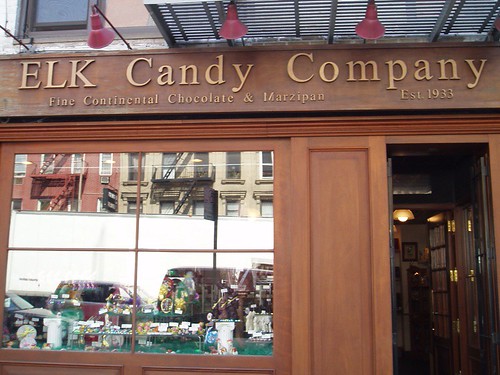
The Friday before I left, the New York Times ran an article about the last of the mitteleuropean stores and cultural landmarks on the Upper East Side/Yorkville. Glaser's Bake Shop and the ELK Candy Company, each in business for years and years, were mentioned as highlights and I spent my last morning in the city eating cupcakes and candy for breakfast. Both spots were outfitted for Easter, with pastels and bunnies everywhere.
Glaser's was empty when I arrived, but soon filled with mom's and strollers, kids shouting their hello's to the woman behind the counter, Joanna. Some looked longingly at the cupcakes, but the mom's only allowed a chick or bunny sugar cookie. As a free-from- parental-intervention but perhaps irresponsible adult, I was able to have a buttercream and Peep topped cupcake for breakfast and it was divine. The frosting was not tooth-achingly sweet and the cake was moist and crumbly. Much better than the
cupcake I sampled last fall at the vaunted Magnolia down the west Village. I also picked up a mix of tiny peanut-butter chocolate dipped, dark chocolate, and lemon cookies for J's office. I didn't sample any, but I understand they were a hit.

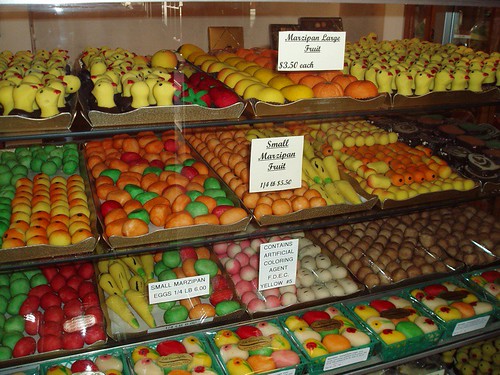
Marzipan at the Elk Candy Company.

The ELK Candy Company just down the street was a quieter, more precise affair. The glass cases housed row upon row of marzipan confections, including multiple trays of chicks. Not a fan of marzipan, I went for the small chocolate eggs instead--one filled with peanut butter, one with marshmallow and one with both marshmallow and caramel. J scored the peanut butter one when we shared later on (damn!), but I liked the marshmallow caramel just fine. Again, not overly sweet at all and the marshmallow was pleasantly chewy. Each egg was kinda pricey at $1.50, but for handcrafted chocolates with quality ingredients from an independent business, I'm not complaining.


Elk Candy Company
1628 Second Avenue, between 84th and 85th
(212) 585-2303


Glaser's Bake Shop
1670 First Avenue, at 87th
(212) 289-2562

The Honorable Mentions:
sugar Sweet sunshine
126 Rivington Street between Essex & Norfolk
Yes, it's run by former Magnolia-ites, but it's a laid back spot with better cupcakes. Plus they have a place to sit, and sell tea and coffee. The lemon is particularly yummy.

Economy Candy
108 Rivington Street, between Ludlow & Essex
This old-time candy store is stocked to the rafters with all sorts of sugary goodies. It also caters to a Lower East Side Jewish clientele with lots of special candies for passover. You can see some pictures here.

Wednesday, April 12, 2006

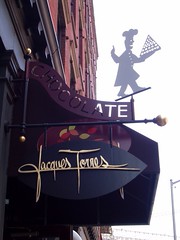
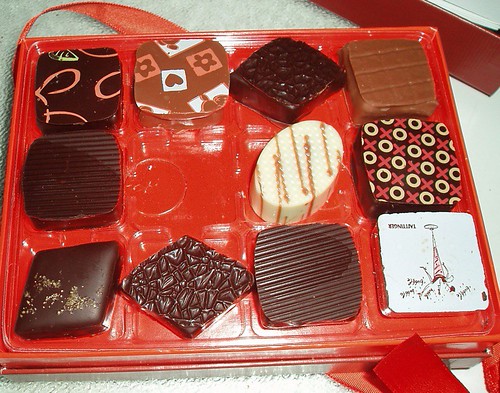
Jacques Torres Chocolate--DUMBO


Jacques Torres is a fancy-pants chocolate-maker with a factory in Brooklyn (he's got one in Manhattan too). The store was filled with chocolate easter bunnies of all shapes and sizes when I visited, but I focused on the small, intriguing chocolates. Like LA's Boule, the flavors are unique--peanut butter and jelly (yum!), rosé wine (eh..), port (yum!), and fresh lemon (the best so far). I still have six left (of the 12 purchased for $15), and am trying to go slow. But I'm the kinda girl who ate all her Halloween candy in the first week or so after the holiday, so we'll see how it goes.


Monday, April 10, 2006

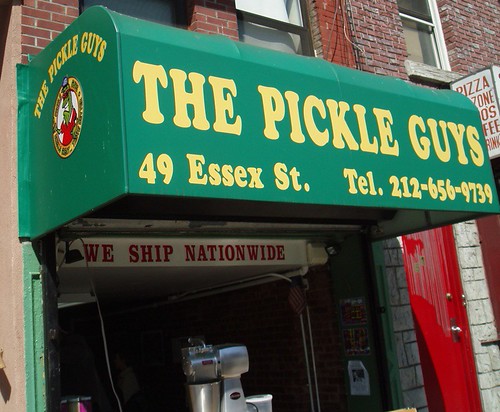
The Pickle Guys--Lower East Side


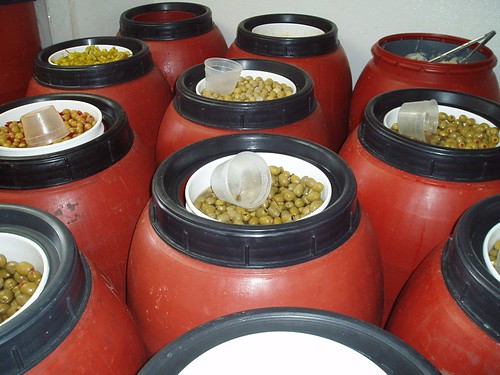
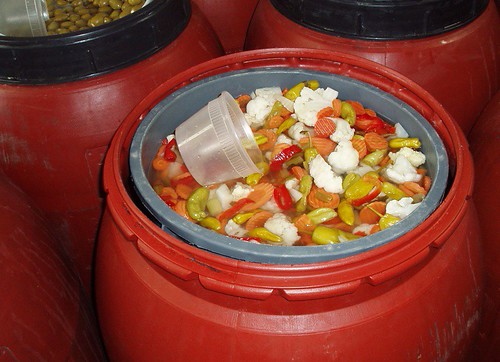
Thanks to some guidance from Manhattan Chowhounders, I visited The Pickle Guys on the Lower East Side today. I had two half-sour pickles for $1.


The Pickle Guys deal primarily in --duh--pickled items, but for Passover, they also make fresh horseradish, right out front. Here are some horseradish roots awaiting their fate.

Gas mask on? Okay, let's grind.

Saturday, April 08, 2006

Green Spring Dinner


To become a favorite of mine, cookbooks must not only provide useable recipes, but also inspire me to try new ingredients, new ideas and new flavors. Pictures help as well (or drawings)--seeing a vision of the final product helps me conceptualize as I go along. Two new cookbooks of mine meet this criteria--Sunday Suppers at Lucques by Suzanne Goin and The Herbal Kitchen by Jerry Traunfeld--as their already-worn spines can attest.

The Sunday Suppers book has introduced me to farro and black rice, and caused me to think more thoughtfully about building layers of flavor in a dish, even if the techniques are exceedingly time consuming. In The Herbal Kitchen, I've discovered uses for lemon thyme, how to start a home herb garden, and been inspired to make herb-infused drinks. As an added bonus, both books are delightful reads irrespective of the recipes, and you learn a lot just the chapter introductions and ingredient glossaries.

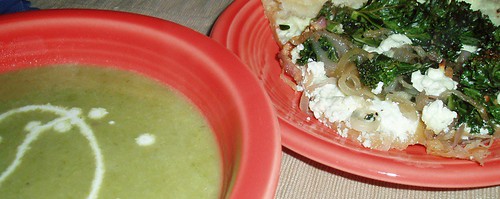
After an afternoon of leafing through both books, Sunday Suppers Swiss Chard Tart with Goat Cheese, Currants, and Pine Nuts and The Herbal Kitchen's Asparagus Soup graced our table last weekend.

My favorite part of the meal was the currant-pine nut relish for the tart, an example of new ideas (to me) and nuanced flavor-layering. You start by heating a saute pan, swirling some olive oil in with a sprig of rosemary and a chile de arbol. Then, add some finely diced red onion and cook until tender. Meanwhile, you gather your toasted pinenuts, and soak your currants (in my case, raisins) in warm water until plump. When your onions are done, transfer to bowl, remove rosemary and chile. Add 3/4 c. balsamic vinegar back to your pan, and reduce, reduce, reduce to 1 tbsp. of syrupy sauce. Mix balsamic with all other ingredients, and then strew the sweet relish over your tart. It pairs beautifully with the bite of the goat cheese and the long-cooked swiss chard, and you'll marvel that you made something so delish in your modest kitchen.
Erin's Kitchen Recipe Index: Soups and Salads

Wednesday, April 05, 2006

Feeling Lou-py


mole, fennel, and sweet salami plank

A few years ago a coworker and I were discussing where to grab lunch, and he, apropos of nothing, definitively announced, "Bacon makes everything better." It was a strange non sequitur, but I had to agree. Bacon, or more broadly--pork--makes everything better. Including LA's newish, crowded, east Hollywood wine bar, Lou.

Lou has a short yet satisfying menu, with lots of pork--the above salami plank, with a rotating variety of meats from Batali, Sr; an ever-changing slow cooked pork dish, and, my new favorite oinkster product, pig candy. We sampled all three (plus a frisee salad, for healthy balance, of course) on our recent trip to Lou. I first read about pig candy in Jonathan Gold's column in the LA Weekly--and it lived up to Gold's accolades. The crispy, brown-sugary, long-cooked bacon pieces are so, so, so good.

Having only been open a few weeks, Lou's still struggling to hash out service issues--the one waitress was overwhelmed and I'm almost convinced it was Lou's owner's wife, NY movie reviewer, Manohla Dargis, helping clear plates for awhile last Friday. Whoever it was, she was a goofy gal--as she took my empty glass, she remarked, "I'm never sure if I'm supposed to talk to the customers or not," followed by a question to J, "Are you done, or do you want to fondle it [his wineglass] a bit longer?"

Lou
724 N Vine St.
Los Angeles CA 90038
(323) 962-6369


Erin's Kitchen LA Restaurant Index: East-ish

Sunday, April 02, 2006

Quest for Mango with Sweet Sticky Rice


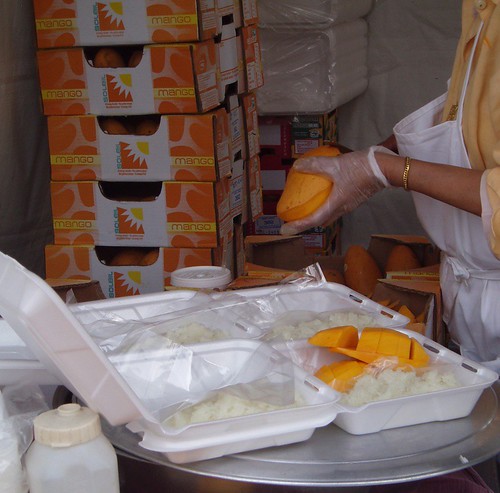
This afternoon I ventured a few blocks down the street to Thai Town for the Songkran (Thai New Year) Festival. Looking for a snack, I spotted this sign. Who can argue with One of the best taste in L.A.? I jumped in the long line.


Everyone ahead of me seemed to order 4-5 servings of rice and mangos. Then this woman in the fancy dress jumped the line and got her 10 servings. Note to self: dress nicer next time.


Soon I was close enough to see the big bowl of sticky rice, scooped out by the plastic-bag covered handful.


The women behind the counter had a system for filling 4 containers at once, and I had ample time to admire their mango peeling and cutting technique. Using the same knife for the entire process, they'd quickly peel one side, in long, length-wise strips. Then one flat cut, again lengthwise, close to the pit. Next, chop-chop-chop-chop-chop, five quick cuts across the width, slide the slices into the styrofoam. Flip, and same process on the other side.


Finally, my turn. I'd never had sweet sticky rice before and was wary, as I'm not a fan of rice pudding. No need to worry, this was fantastic, as was the perfectly ripe mango. I have not been able to figure out what the crunchy bits are, but they provided a nice foil for the glutinous rice. Anyone knows what they are, leave a comment, please!

For more Songkran Festival pictures, visit: Thai Festival on Flickr


Saturday, April 01, 2006

Favorite Things Saturday: Masala Chai Tea

simmering tea, spices, milk and water

Studying abroad in Zimbabwe was where I first realized the pleasure of tea--as a former British colony, it's a well established ritual in rural villages and the cities--mid-morning, mid-afternoon, and often late evenings. Prior to the trip, I never put sugar or milk in my tea, but was basically forced to do so there as every family I stayed with expressed shock and bewilderment when I didn't. And they were right--it is much better when richly mixed with the two. Now, six years later, an afternoon or right-before-bed cup of tea is a favorite comfort in my life.

I don't often drink heavy black tea full of sugar and milk these days, often opting for green tea with lemon or a mint tisane instead. However, with the ongoing rain and cold weather here, yesterday I wanted something cozier and remembered Jasmine's post about homemade masala chai. Chai incorporates my favorite spices--cloves, cardamom, cinnamon, star anise and while you can buy chai teabags or loose tea, it's incredibly easy to make yourself. Simmer some black tea, the lightly crushed spices, milk and water for a few minutes, let it steep for a few minutes more, strain into a cup, mix in your sweetner of choice, curl up on the couch with a book, and you're all set.

This post is for Jill's Favorite Things Saturday.